

Red tamale sauce is an essential recipe for your authentic Mexican pork or beef tamales, made with real Mexican dried chiles.
When you’re ready to make a tamale commitment, be sure to use an outstanding homemade sauce like this one.
Recipe | Dried Red Chiles | Vegetarian | Tamale Party | Mexican Gravy
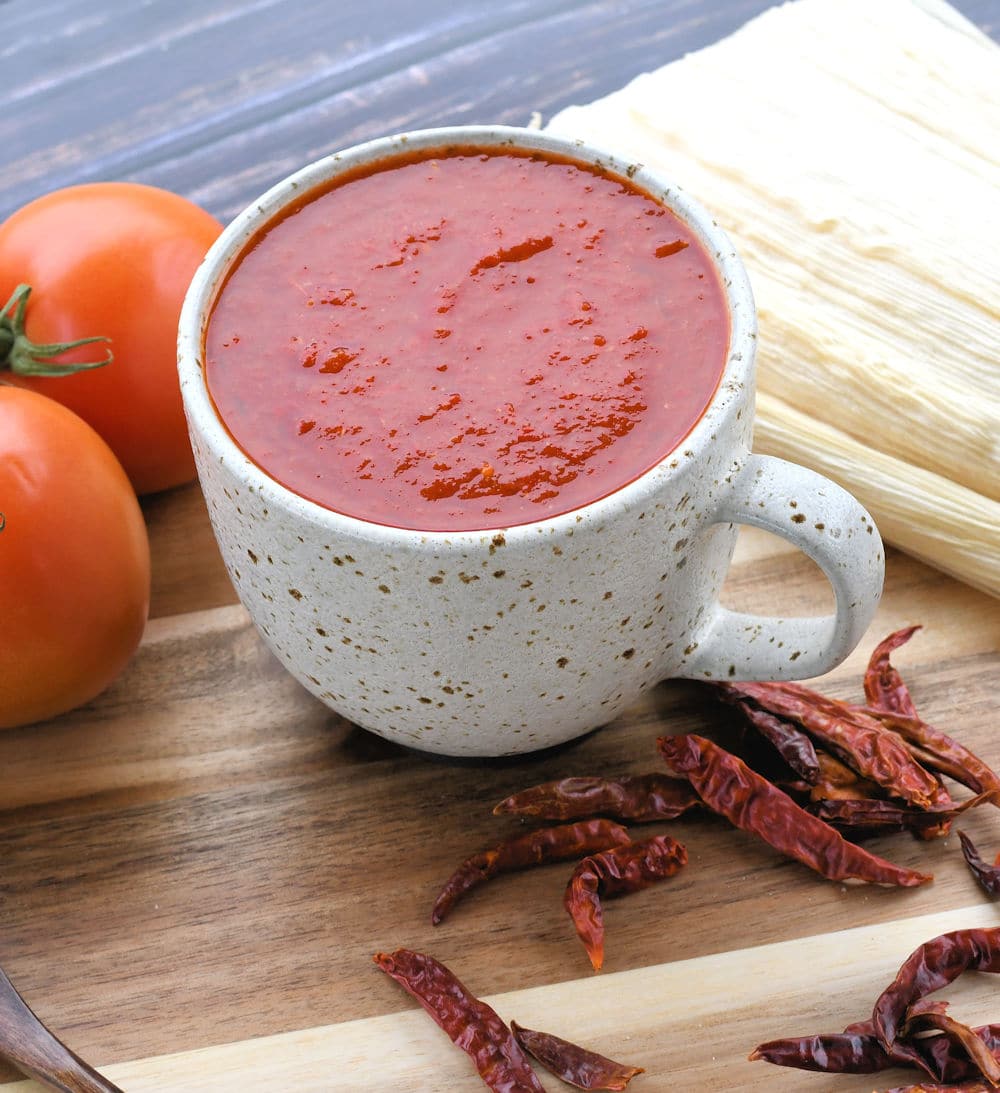
This is an authentic tamale sauce, made with dried red chiles. I’ve used mostly chiles that aren’t very spicy. My favorite dried chiles are California, New Mexico, Ancho and Pasilla.
For just a touch of heat, I’ve also used chile de arbol. They’re small but mighty!
How to Use This Tamale Sauce
Our first tamale recipe is for traditional pork roast tamales. Pork tamales are the most typical tamales you will find.
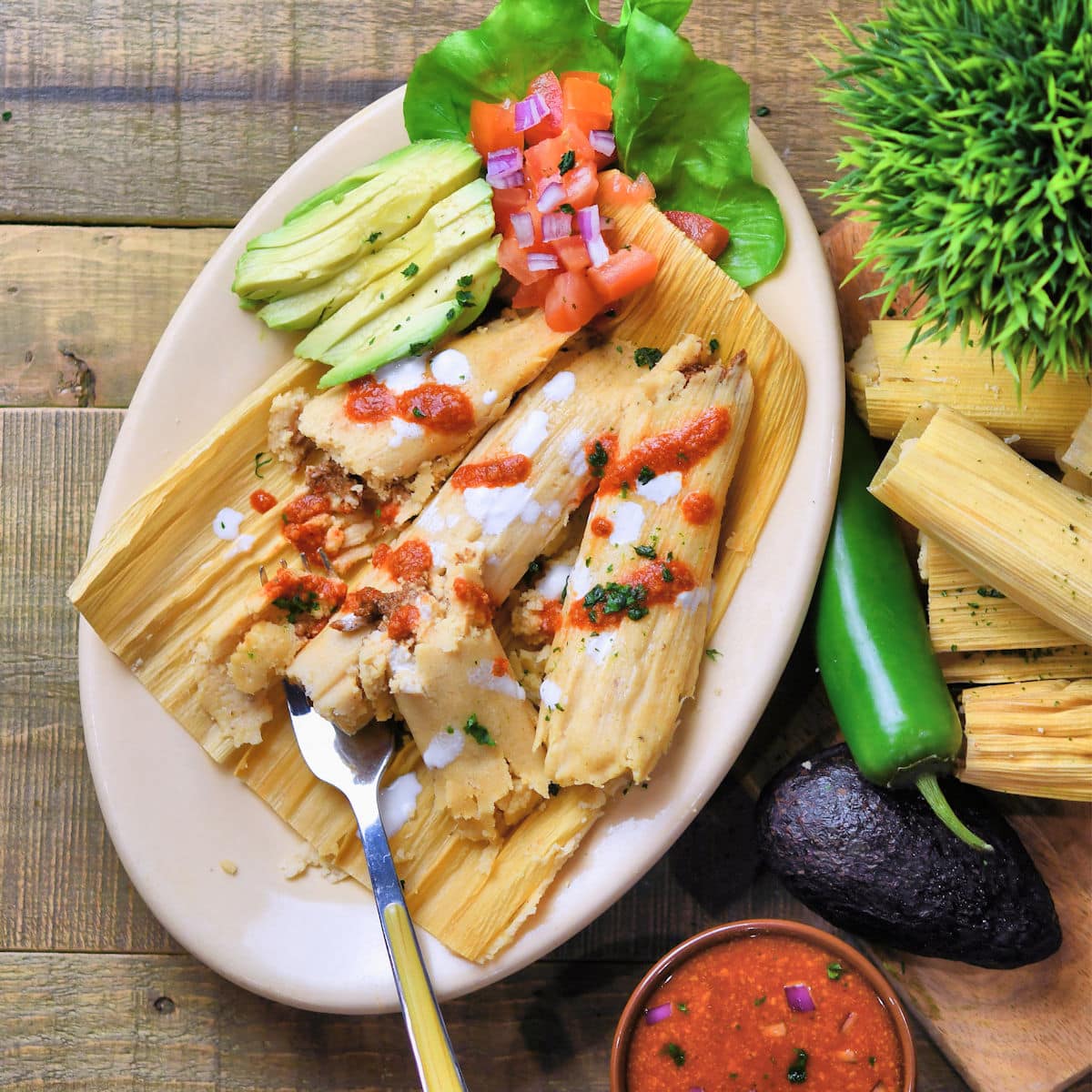
For traditional pork tamales, I’ve used a small amount of sauce in the masa to give it extra taste and color. The rest is mixed with the pulled pork roast filling.
Dried Red Chiles
Feel free to mix and match your chiles! My favorite is California red chiles, but I could also use New Mexico, pasilla or guajillo chiles.
I like to add a touch of smoky flavor with some ancho chile, the dried version of poblano.
Choosing your chiles is where you can let your personality shine.
If you like chipotle, try adding it as well. The sauce is the beauty of Mexican cooking. Choosing your chiles is where you can let your individual personality shine.
To add a little bit of chile heat, I’ve used two arbol chiles as well. They are quite hot. Whew! I tasted the sauce and, wow! Yeah, it was plenty spicy.
Remember that your sauce is going to be spread out and mixed with other filling and then enveloped in corn masa. If you don’t have enough taste (and heat!) in your sauce, you could end up with bland tamales.
Eating this sauce with tortilla chips, for instance, might have been too spicy for me. But, mixed with everything else, it was perfect.
To learn more about how much spicy heat is in each chile pepper, view the Scoville Heat Scale which lists several different peppers used here.
Frequently Asked Questions
Yes, I will frequently use this recipe, swapping out whatever dried chiles we have in the cupboard. The only difference is that I decrease the amount of salt and spices. For tamales, the quart of sauce will be spread out to up to four dozen pieces. For enchiladas, on the other hand, the sauce may be spread to only 18 pieces. I usually reduce the spices in this recipe to one teaspoon each instead of one tablespoon.
I like to use a red tamale sauce for beef and pork. It’s tomato based so tastes great combined with these meats. For chicken and vegetarian tamales, I prefer green tamale sauce which is tomatillo and green (verde) chile based. Try a Mexican Gravy recipe for a tasty pour over topping.
Tamales are almost always naturally gluten free. They are made with masa flour which is made from corn, not wheat. The only exceptions may be dessert tamales.
Easy to Make Recipe
You don’t even need to chop the vegetables. Just quarter the tomatoes and loosely chop the peppers after you’ve removed the seeds. Soften them up by simmering them in chicken stock.
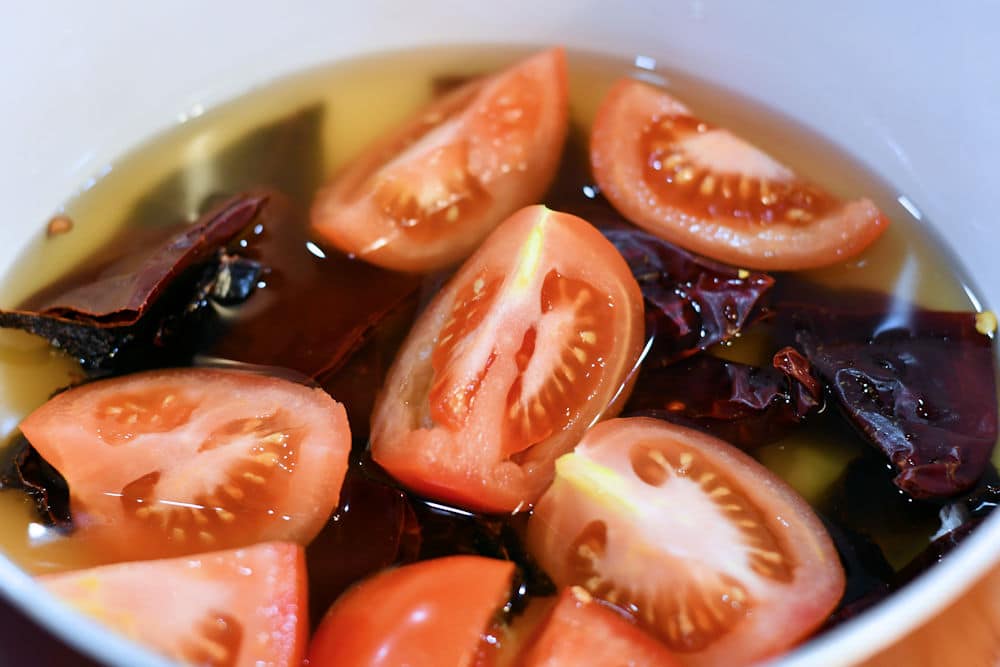
Once you’ve mixed everything up in the blender, it will be smooth like tomato juice.
Always use care when you’re using the blender with hot ingredients. Start off slowly.
If you go all wild with your tamale sauce and run the blender on high, it will explode from the top and likely burn the hand you have sitting on top of the lid.
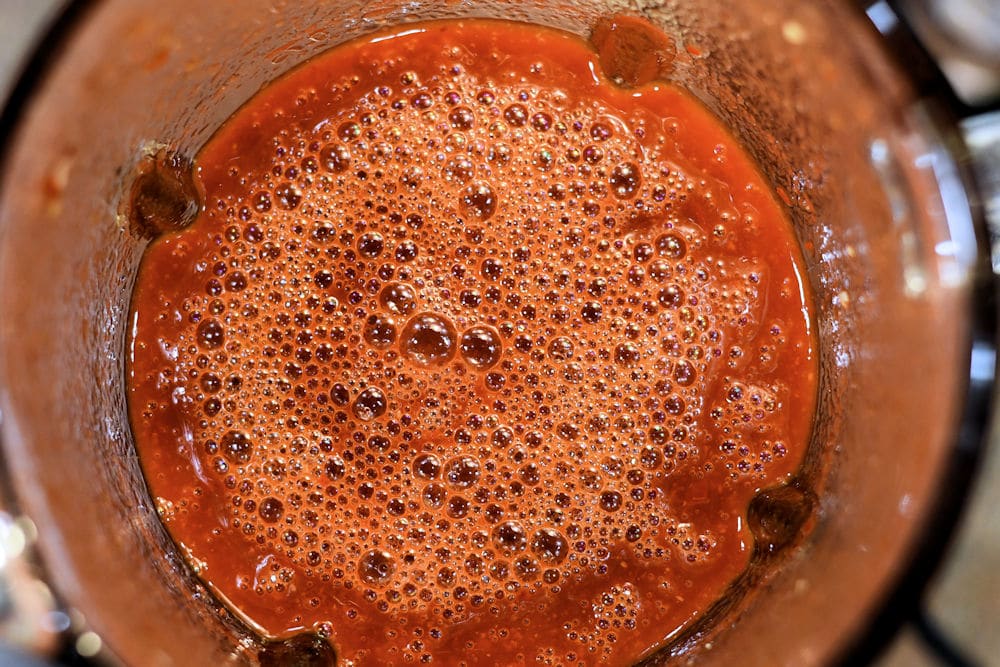
When you get finished, you will have a quart of incredibly delicious and fresh tamale sauce. If you’re going to make your tamales right away, set it aside until you’re ready. If you are making it ahead, refrigerate after it’s cool. Use within three to four days.
Mexican Red Sauce
Mexican “Red Sauce” can mean many different sauces. You can use it for tamales, enchiladas, tacos, pozole and more.
This tamale sauce recipe uses both chiles and tomatoes. It works really well for seasoning the tamale filling.
If you prefer a sauce made without tomatoes, try this Red Enchilada Sauce recipe instead. It makes a quart as well.
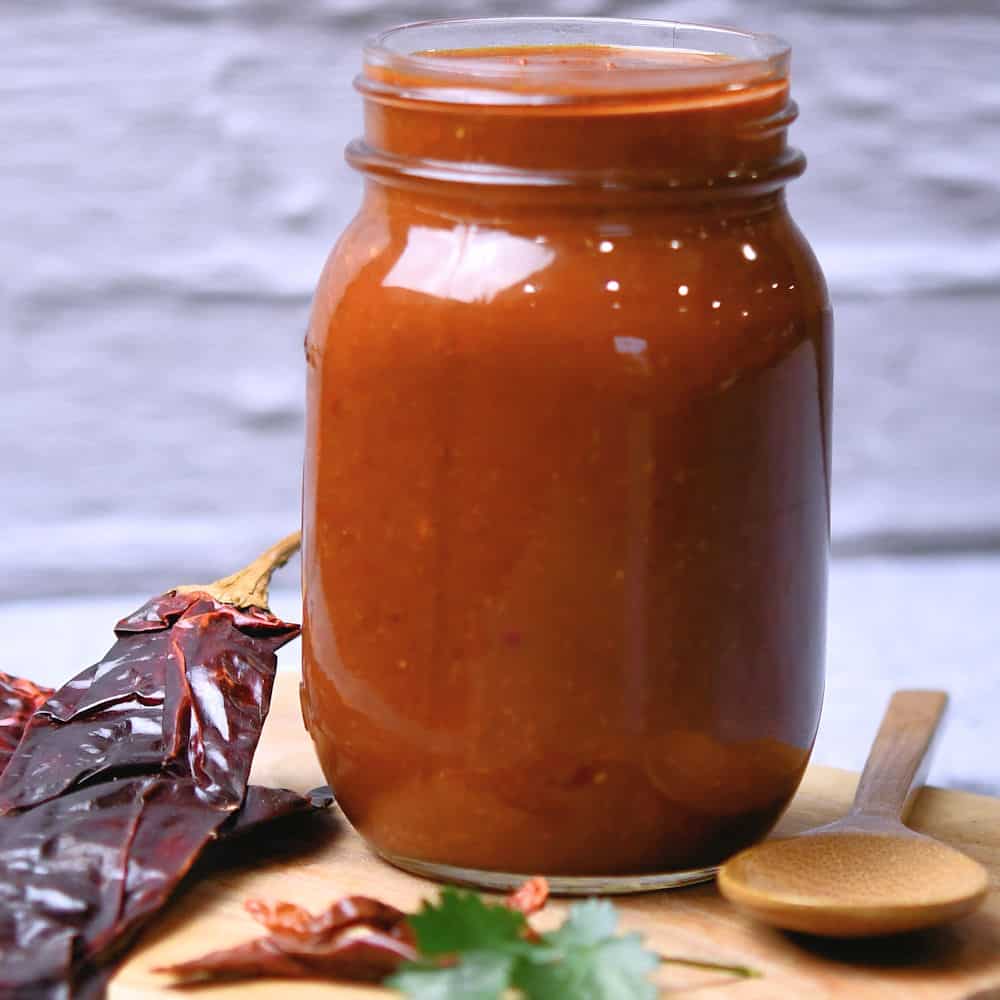
If you want to use it for tamales, you may want to increase some of the seasonings.
What is Mexican Gravy?
My idea of a great Mexican Gravy that you can serve on top of anything from tamales to nachos is my Red Enchilada Sauce. Once it finishes cooking and it’s still hot, stir in a cup of cheese. Yum!
How to Use Tamale Sauce
When we make pork tamales, we only need a quart of this homemade tamale sauce. It will make about 45 tamales or so. If you plan on making more tamales, you can double the recipe. But, don’t put the entire thing in the blender at once. Blend up only about two cups of the mixture at a time.
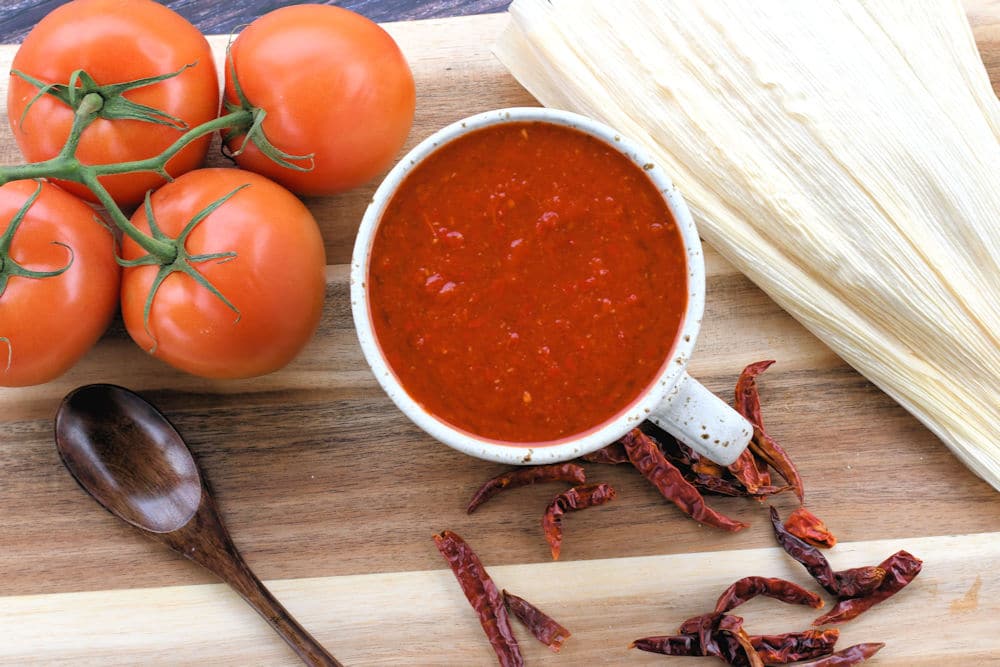
Making it Vegetarian
If you’re wanting to make homemade vegetarian tamales, use vegetable stock or water instead of chicken stock. It will be just as delicious.
Hosting a Tamale Making Party
If you’re interested in hosting a Tamalada (spanish for tamale making party), learn more about preparing for a Simple Tamale Party from Global Grub.
More Delicious Mexican Food
This is the sauce that we recently used for some really incredible Pork Tamales. Or try these other delicious Mexican recipes.
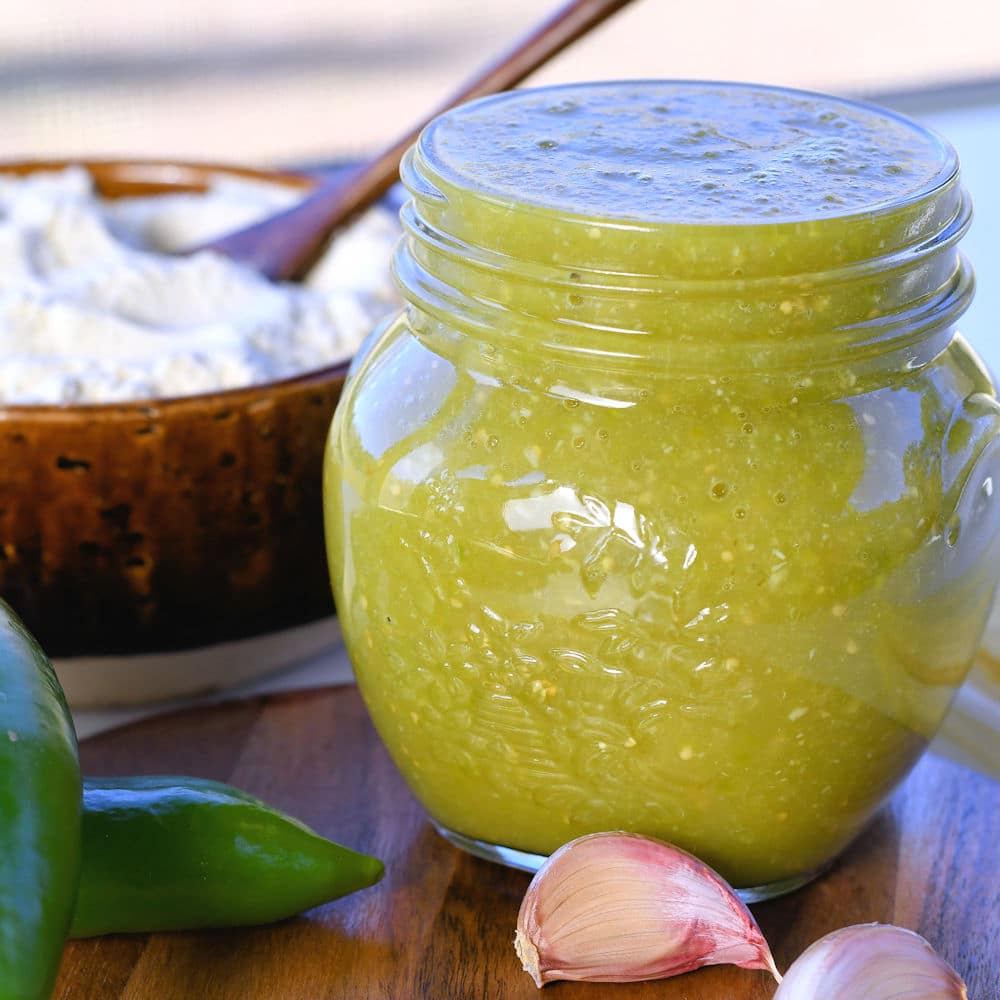
If you like tamales, be sure to try chicken tamales too! Pair it with this Homemade Verde Tamale Sauce recipe.
Recipe
Red Tamale Sauce Recipe (+video)

Equipment
- Stand up blender or immersion blender
Ingredients
- 8 Red Anaheim Peppers dried (see notes)
- 2 Arbol peppers dried
- 2 medium Tomatoes quartered
- 4 Garlic Cloves
- 3 cups Chicken Stock divided (or up to 6 cups for desired consistency)
- 1 tablespoon Ground Cumin*
- 1 tablespoon Salt*
- 1 tablespoon Onion Powder*
Instructions
- Carefully split the peppers and remove seeds and membranes. Cut peppers into 1-2 inch pieces. Arbol peppers are small so no need to cut those.
- Using a firm bristle brush, wash peppers.
- Place peppers, tomatoes and garlic in pan with 2 cups chicken stock (or enough to cover). Heat on medium and bring to boil, then reduce to low and simmer for 20-30 minutes until soft.
- Remove all vegetables and remaining spices to blender and blend until smooth. Note: If water has turned too dark, you may want to strain the vegetables to the blender then discard the liquid and replace with fresh chicken stock. Return all to the same pan.
- Simmer for 15 minutes to thicken slightly. Add more spices or salt to taste, if desired.
Video
Notes
Percent Daily Values are based on a 2000 calorie diet. All amounts are estimates and 24Bite® takes no responsibility for actual figures since calculations vary by packaging and supplier. Please calculate the amounts yourself based on package labeling if you have specific dietary requirements. 24Bite®, Kim Guzman or Christian Guzman shall not be liable for adverse reactions or any other outcome resulting from the use of recipes or recommendations on this website or actions you take as a result. 2019-2026 Kim Guzman and Christian Guzman. All rights reserved. 24Bite®
Follow 24Bite:

This is such a yummy sauce. Thank you so much for sharing.
Such a tasty sauce and so easy to make!
Oooooo… yes! There is nothing better than authentic Mexican food. Definitely trying this recipe soon. 🙂
Delicious! Will definitely try this!! :p
Homemade sauces are my absolute favorite! This tamale sauce looks great and I can’t wait to try it out soon!
One question…we are “empty nesters” so we don’t eat a huge number of tamales at a sitting. Thus we tend to freeze our steamed tamales in small batches. Can this sauce be frozen in small batches to match our tamale batches??
Thanks, we had the first ones last night sans sauce and they are really SO much better with a sauce 🙂
I frequently make a double batch of this sauce and freeze one for later. If you are using this sauce as a condiment, you may want to reduce the amount of seasoning since this recipe is for the inside of the tamale. I use the same sauce but I prefer to reduce the salt when using it as a condiment. I also made an excellent enchilada sauce recently that would be great to top tamales too.
Thank you. We do like a spicy sauce and the tamales we were gifted with this go round were pretty much unseasoned. Had I been making them, the meat as well as the masa would have been seasoned more highly. With these, this sauce should be great don’t you think??
I will plan to freeze what is left, 2T per serving in ice cube trays. Once frozen they can be bagged together and you can take out just what you need.
Yes, absolutely! I also like to freeze in ice cube trays. Sounds like a great idea!
cleaning the seeds and veins from dried chilies is a bit of a chore and somewhat of a challenge, scrubbing the dried chilies under very hot water stream from the faucet was OK, and softened the dried peppers making the easier to clean under slow trickle of cold water, but be sure to wear disposable gloves, and be careful as the vapor can really get to you while removing the seeds and veins. I was coughing when I was cleaning the big chilies, and the small Chili de Arbol peppers made me cry and my sinus start flowing a respirator may have helped. ROFLMAO
My mom always coughs when cleaning chiles under the faucet. It happens everytime. I prefer to remove the seeds from the chiles while dry, though. I break them open and run a stiff brush over them. That may work for you as well. It sounds easier than under water. I have a hard enough time with onions. ha!
Omg!! Really authentic tasting! Thank you!
I’m so glad you enjoyed it! Thank you for visiting.
Thank you for this recipe; it is SO DELICIOUS!
I have a ton of chilies ripe in my garden right now, so I was wondering if and how I could make it with those fresh chilies instead. Thoughts?
Lucky you! I have several recipes for sauce using fresh chiles. You can mix and match the chiles depending on how spicy you like it. Here’s one. https://24bite.com/green-enchilada-sauce-with-roasted-chiles-and-tomatillos-recipe/
Thank you so much!
You’re welcome! Thank you for visiting.
The recipe is great, but 1 tablespoon of salt is too much, especially if you reduce it. I’d suggest salt to taste, which the instructions kind of do, but the recipe calls for 1 tablespoon, which is more than required, by most, for this volume of sauce.
Thanks so much for visiting! I agree; it’s a lot of salt. This sauce recipe is added to the meat and it makes about 50 tamales. The tablespoon of salt is spread over 50 tamales, for .3g of salt per tamale. However, if you want to use the sauce as a condiment, you definitely should use less salt. I like to provide exact amounts for nutrtional values so that people can make their own choices. If you need to reduce the sodium, salting to taste is a great way, but I wouldn’t be able to provide nutritional values for that. I hope that helps.
Tomatoe sauce.on tamales not traditional. It’s a California aberration. Real authentic Mexican tamales don’t use tomatoes in their tamal recipe.
This isn’t true. There are many recipes from actual households in Mexico who use tomato in the sauce used to cook the meat for tamales. If I called this chile sauce, or if I were to make my enchilada sauce, the name itself denotes the use of chiles without tomatoes. Salsa para tamales is different. You can use whatever is traditional for your family. To think every single person in Mexico makes something one way isn’t logical.
No one ever tells you that the masa needs to float in cold water!! It’s so important!! If it doesn’t float in water, you need more lard or you need to mix it more. If your mixing it by hand, it takes 30 to 40 minutes of mixing to get the masa to float!!
It’s true that many recipes will suggest that the masa float on water. I find that this works better when you use room temperature lard. For my masa recipe, on a different page, the lard is melted first. It doesn’t have the same results. I find that my instructions work best for me and for people who would like to learn to make tamales the way my family makes tamales. Suggesting that every single person in Mexico makes everything exactly the same isn’t logical. Mexico is a big country.
The flavor is great. I used maybe 15 or so Puyu and a few Ancho.
But the sauce still has bits of pepper in it. I’m straining over night through cheese cloth just to make a smooth sauce. Any advice? Thank you.
If you want to strain the sauce, I have a video demonstrating how I do this at 3:58min here:
https://24bite.com/chicken-birria-tacos/#recipe
I don’t always strain it. It really depends on which chiles I’ve used and how I’ll be using the sauce later. The strainer we use for this is very fine and actually has two layers. I press it through with a spoon then throw away the remaainder.
I hope that helps and thank you for visiting!
I made the sauce again this morning. Used more Puyu and more Ancho with still only two cups of chicken broth. The same jarred chicken broth you have in the video. I soaked the peppers longer in warm water to clean them, changing the water twice and then I very low simmered the peppers, tomatoes and garlic in the broth for a longer period of time. A few hours. It blended up perfectly with nothing to strain. I’ve used this chicken broth for many years so I know how salty it is. The addition of a Tablespoon of cumin and a Tablespoon of onion powder is great. But a Tablespoon of salt is a just a bit over the top. And I really like salt! Next time I’m going to hold off adding salt until I taste the finished product. Thanks again for teaching us how to make this very, very good salsa!
That sounds great! I’m so glad it worked out for you. For the salt, it’s a lot. I agree. Since I use this for tamale preparation, it gets spread out over about 50 tamales. But, if you’ll be using it more as a table sauce, then I can absolutely see how you would want to use less. Thanks so much for sharing your experience with me.
Nothing compares to a homemade sauce and this tamale sauce is absolutely delicious and worth taking the time to make!
That’s great! I’m glad it worked out well for you. Thank you for visiting!
should the peppers be cleaned before chopping?
All fruits and vegetables should be cleaned before chopping. In this particular recipe, I’ve instructed that the dried chile peppers be scrubbed with water and a brush before adding them to the water to soften.